
|
A TO Z OF HERBS
C is for Coriander, Cumin, Chamomile and Chives
|
Coriander
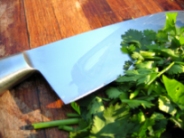 Often used in curries and in Thai food, coriander is, for some, an acquired taste. Use it in casseroles, salads, soups and chutneys.
Coriander is an annual so you will have to sow it each year in a sunny place.
Coriander is said to be an aphrodisiac and will soothe the stomach. It also repels aphids, blackfly and cabbage moth so is a good companion plant for cabbage and carrots.
Cumin
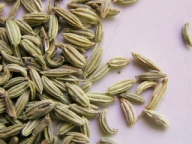 Another one for Middle Eastern and Indian dishes, this tender annual is grown for its seeds.
You need to grow it in a sunny position and protect it from frost.
In the kitchen, use it in curries, with lamb and in yogurt. Medicinally, it is good for the digestion and has an anti-flatulent effect.
Chamomile
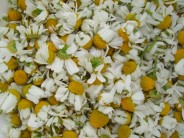 Chamomile is not a herb for the kitchen but it has many other useful qualities.
Chamomile tea has sedative qualities and an infusion of chamomile makes a great hair rinse for blondes. It is also used to treat bruises, swellings, sprains and tension headaches.
In the garden it is said to cure sick plants when situated mext to them and makes a great compost activator.
True chamomile, as opposed to the straggly wild annual chamomile, is best grown from young plants or runners. For a dense chamomile lawn, remove the flower heads.
Be careful with chamomile if you've never tried it before. It can produce a severe allergic reaction in some people.
Chives
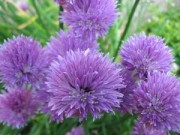 This is a lovely little plant and very easy to grow. Grow in full sun if you can or keep it indoors on a sunny windowsill. Water sparingly.
Chives have a mild onion taste and can be used in salads or chopped in sauces, with seafood, cheese or potatoes. Chive flowers are also edible and are a really pretty decoration for salads.
Chives repel aphids so are a good companion plant and the leaves are said to have a general tonic effect and to aid digestion.
|
|


